
Veylan
An AI-native workflow product for marketing, allowing teams to plan, build, launch, and optimize campaigns.
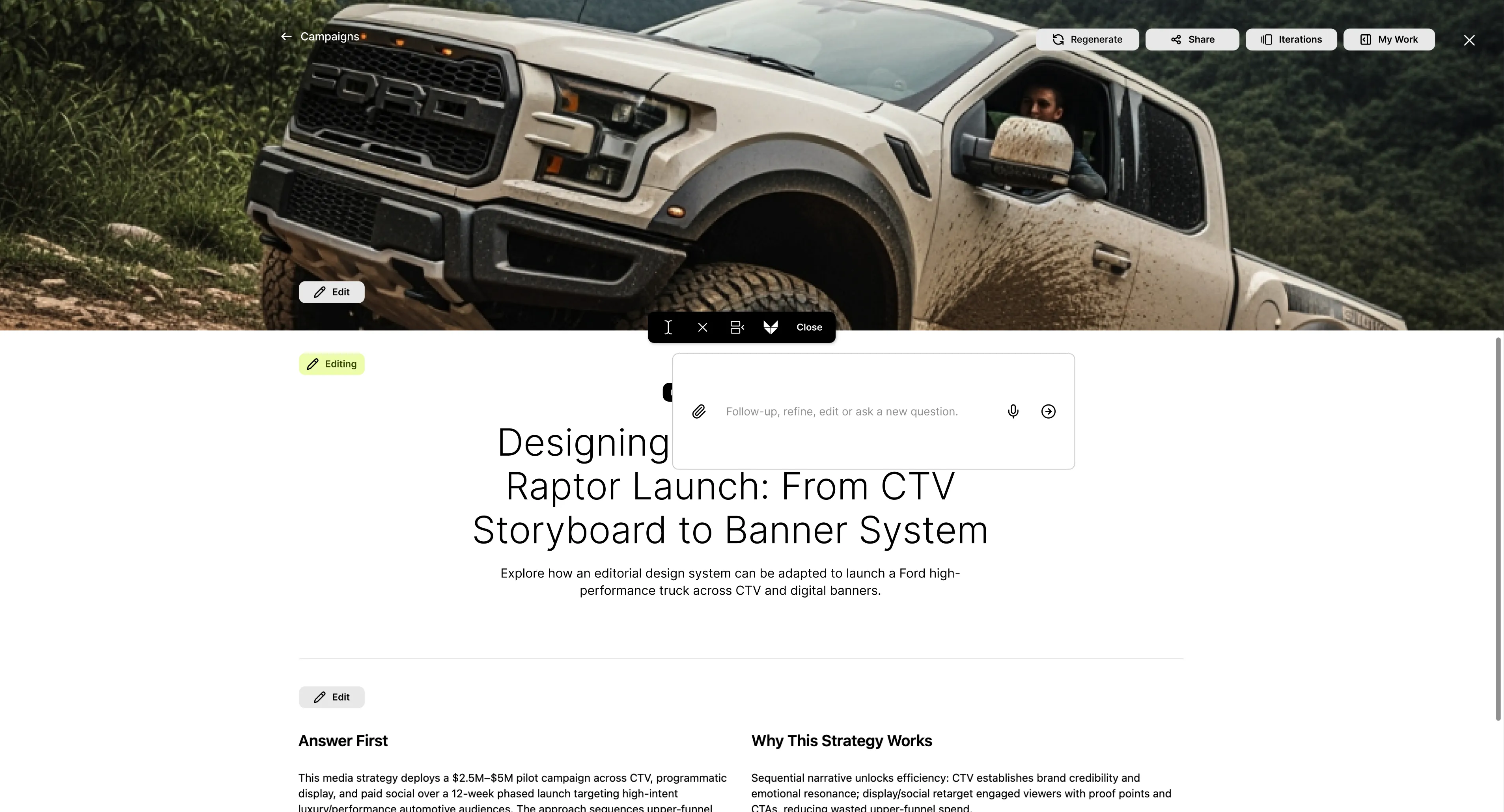
What Veylan is
Sold to brands, agencies, publishers, and ad tech platforms. Used by sales, planning and analysis, creative, and ad ops. One product, four jobs to be done.
Why it’s AI-native, not AI-bolted
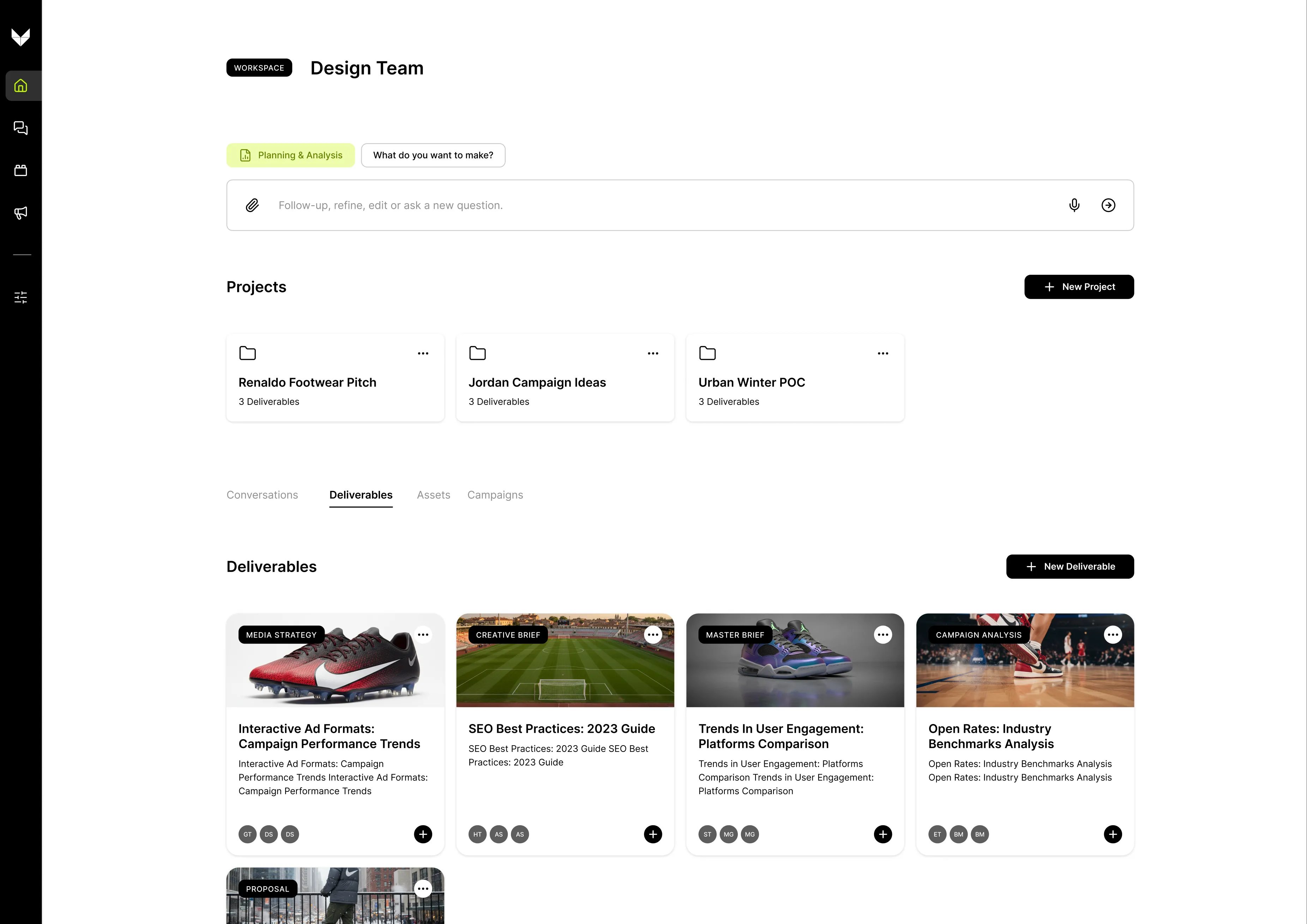
Most “AI products” are SaaS with a chat box stapled on. Veylan is the inverse — the Workflows are the product, and the UI assembles itself around the work each role is doing.
I built a generative UI system that renders Deliverables from a JSON content structure, against a design system served via MCP, with a design-prompt layer choosing components and tokens at runtime. The design system stops being a static library and becomes a runtime source of truth the product reasons against.
How I work
A few hours a week in Figma. The rest in Claude Code — prototyping, running UX research, and shipping front-end code against the design system the engineering team and I built.
The thesis: AI increases output. However, the bigger advantage to me is the wider skill set. It lets a designer do things designers don’t typically do, like the front-end engineering I’m doing now, and real product strategy work alongside it. A 30-year product design career, now operating across design, strategy, and engineering. Not a designer using AI. Not an AI-only operator. A wider practitioner than I was two years ago.
What’s shipped
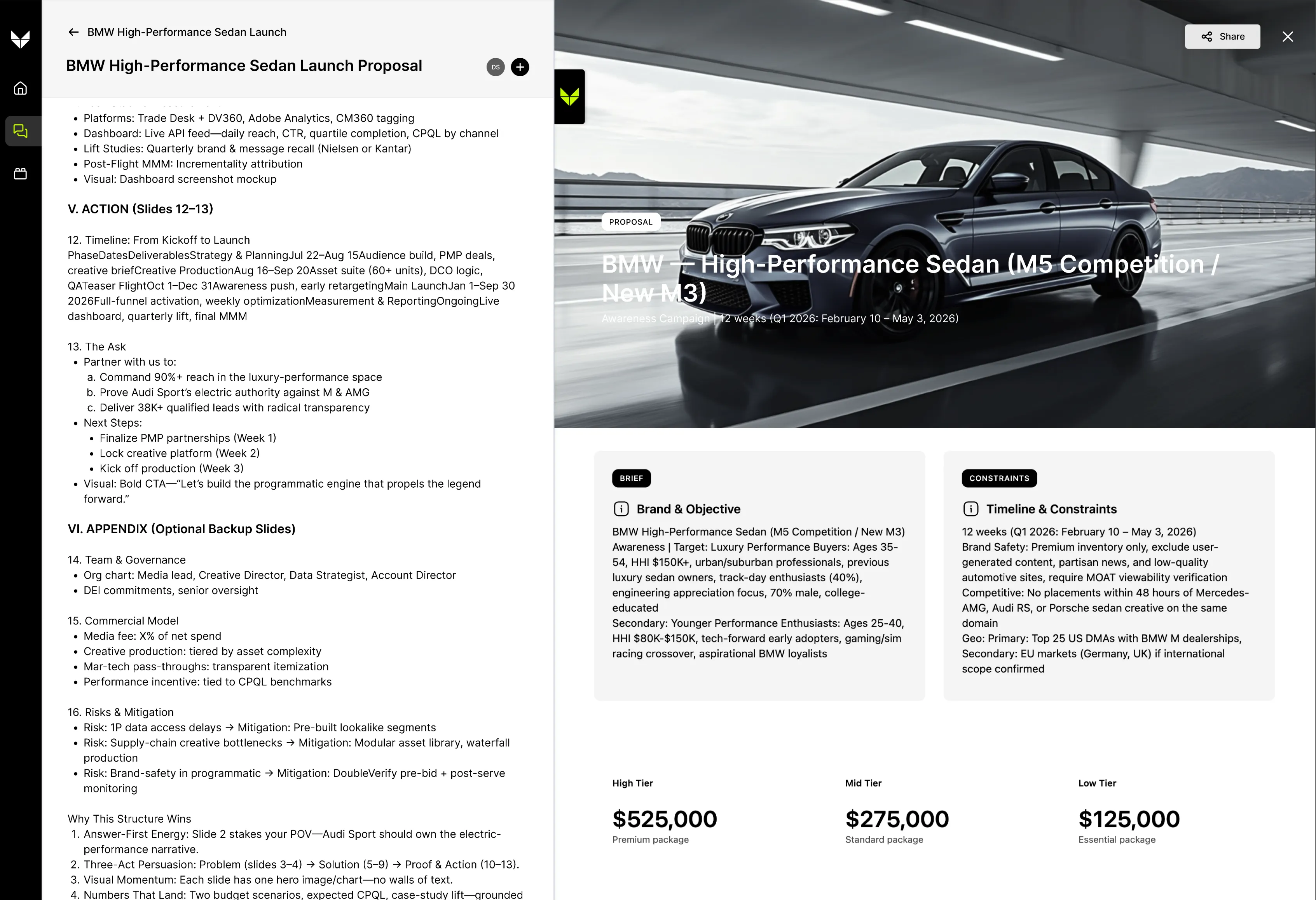
- Conversational UI elements rendered inside the workflow — the bridge from “AI beginner” to agentic.
- A drawer pattern for assets and Deliverables inside a workflow.
- The design system + MCP server + design-prompt layer that powers generative UI.
- A generative UI spike, now in production hand-off with the AI engineering team.
- In flight: contextual onboarding that teaches the product and AI at the same time, to compress time-to-value as we open up SMB and self-serve.
What I’ve learned
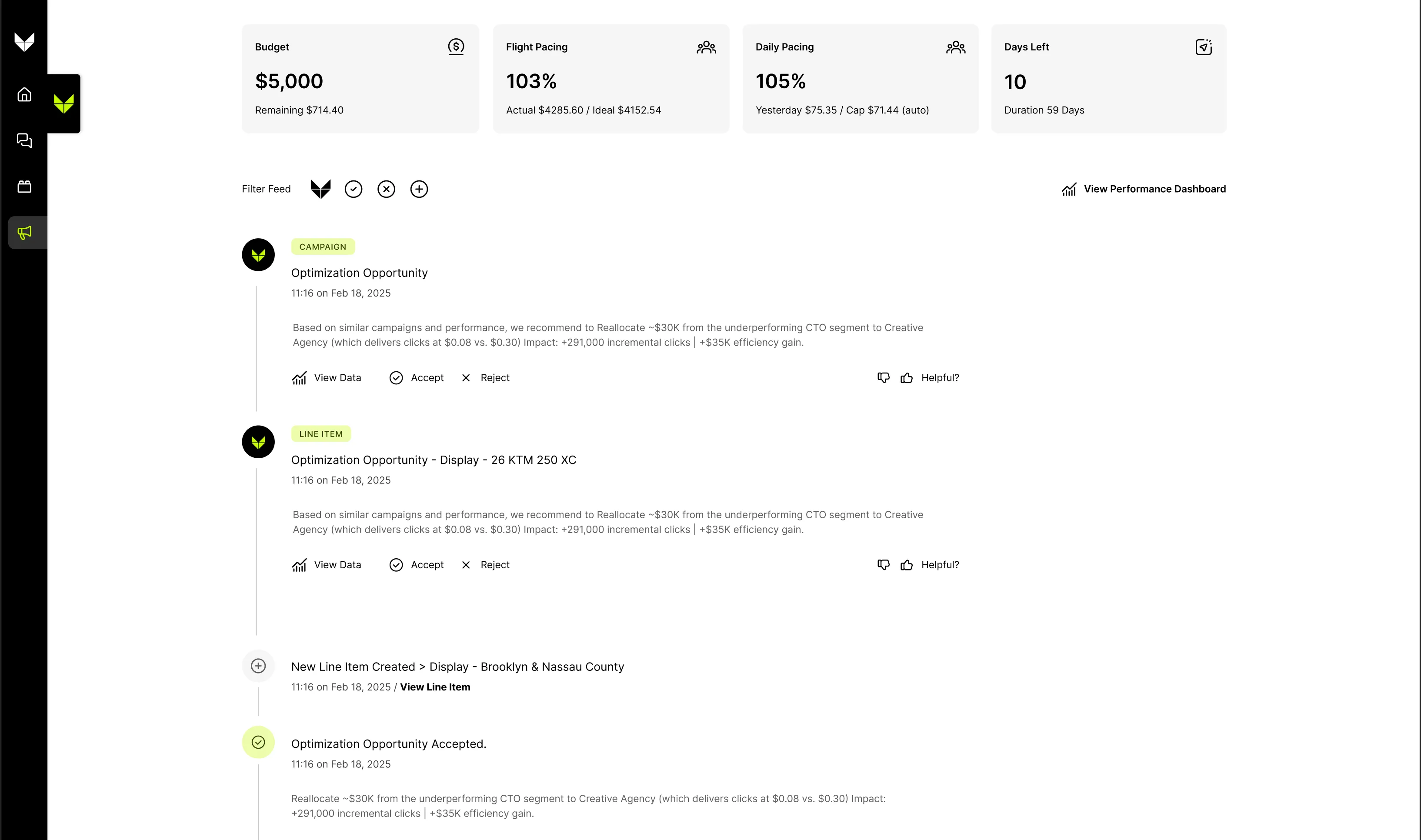
AI is moving fast enough that the role itself is changing under everyone’s feet. An AI-native, early-stage company is the right place to feel that — the lines between product design and engineering are open by default, because the company can’t afford for them not to be. That’s the environment I’ve spent most of my 30-year career in: small teams, ambiguous problems, ship-or-die pace. What’s different now is the leverage. The same pattern recognition that used to live in my head is now compounding with AI tooling, and the result is work that’s both faster and more accurate than I could produce on my own — across design, strategy, and front-end engineering.